Manufacturers outgrow spreadsheets and disconnected systems when inventory, purchasing, production, fulfillment, and accounting no longer stay synchronized. This guide explains how modern manufacturers create connected workflows that improve visibility, profitability, and scalability.
Managing inventory is challenging. Managing inventory, production, purchasing, fulfillment, and accounting together is where many growing businesses begin to struggle.
What starts as a few products, a handful of suppliers, and a simple accounting system often becomes dozens of SKUs, multiple sales channels, production workflows, purchasing requirements, and increasingly complex reporting needs.
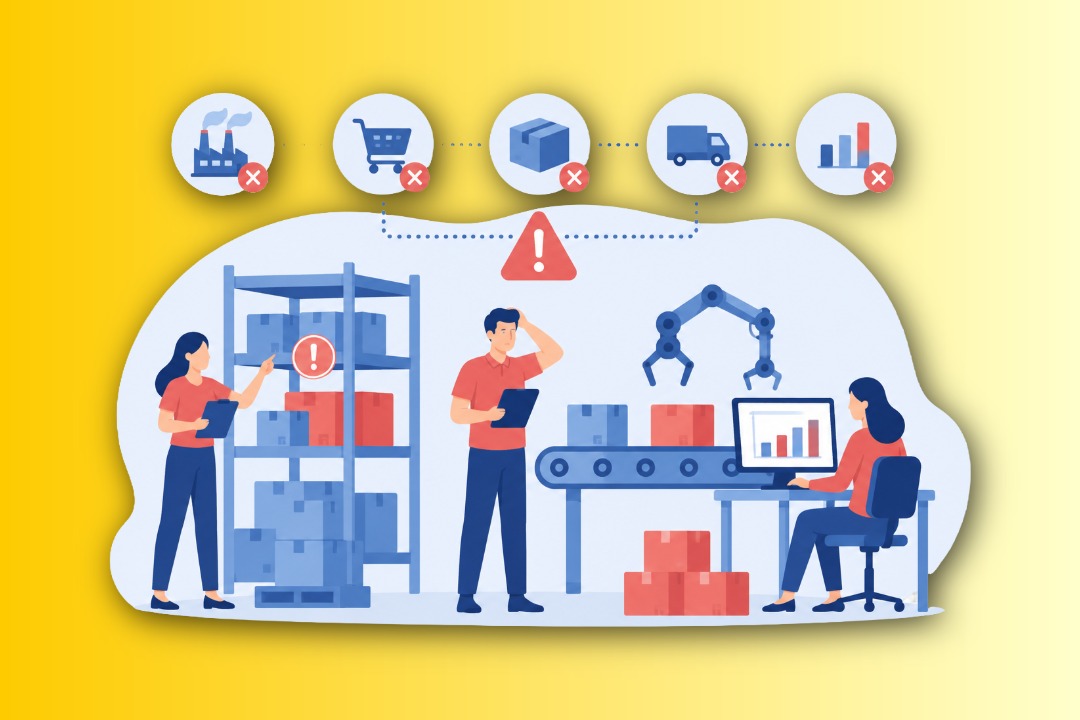
Without connected processes, teams spend more time updating spreadsheets, reconciling data, correcting inventory issues, and manually moving information between systems.
Manufacturing accounting and inventory automation helps bring operational and financial workflows together so business leaders can make decisions based on accurate, timely information.
Growth creates complexity. More products, more materials, more suppliers, more sales channels, and more production steps all increase the pressure on your systems.
When inventory, production, purchasing, and accounting are disconnected, teams spend too much time checking numbers, fixing mistakes, and reacting to shortages. Connected automation helps businesses make better decisions earlier - before small issues become expensive delays.
Most manufacturers do not outgrow their systems all at once. The problems usually build slowly.
A spreadsheet works for a few products. A basic accounting system works while production is simple. Manual purchasing works when supplier activity is light. But as volume increases, these workarounds create blind spots and disconnected systems. Inventory lives in one system, Accounting lives in another, Production planning happens in spreadsheets, Purchasing is tracked through email, Reporting requires manual reconciliation. Over time, these disconnected workflows make operations and growth harder to manage.
Common symptoms include:
The challenge isn't usually a lack of effort. It's a lack of connected information.
Ask a few key questions:
Manufacturers often rely on multiple systems to manage inventory, production planning, purchasing, fulfillment, and financial reporting. As operations grow, these disconnected tools create duplicate work, inconsistent data, and limited visibility across the business.
CustomBooks™ is designed to bring these operational workflows together in a single platform. Instead of manually moving information between spreadsheets, accounting software, inventory tools, and production systems, teams can work from one source of truth that connects operational activity directly to financial outcomes.
By linking inventory, purchasing, production, sales, and accounting processes, businesses gain better visibility into what is happening across the organization and can make decisions using real-time information rather than outdated reports.
CustomBooks™ supports this transformation through:
The result is a connected operational environment where inventory, production, purchasing, and accounting work together instead of operating in separate silos.
The goal of manufacturing automation isn't simply to replace spreadsheets or reduce clicks. The real value comes from improving visibility, reducing operational friction, and creating processes that can scale as the business grows.
When inventory, production, purchasing, and accounting share the same operational data, businesses often gain a clearer understanding of material requirements, product costs, inventory availability, and overall business performance.
Whether you're producing a handful of products or managing hundreds of SKUs across multiple sales channels, connected workflows help create a stronger operational foundation for growth.

Manufacturing automation is not only for large enterprises. In many cases, growing businesses see the greatest benefit because they are managing increasing complexity with limited resources.
Organizations that commonly benefit include:
Across all these groups, the common need is the same: faster, more reliable manufacturing operations.
The resources below cover common manufacturing and inventory challenges including Bills of Materials, inventory accuracy, purchasing workflows, production planning, ecommerce fulfillment, ERP alternatives, and accounting automation. Whether you're evaluating software or improving existing processes, these guides provide practical insight into building more scalable operations.
Every business has unique processes.
Some manufacturers require specialized production workflows. Others need custom reporting, inventory controls, purchasing approvals, integrations, or operational dashboards.
CustomBooks Professional Services helps businesses adapt the platform to support their specific requirements rather than forcing teams to change the way they operate.
From workflow design and implementation support to custom enhancements and integrations, our team works alongside clients to create solutions that support long-term growth.
Whether you're struggling with inventory accuracy, relying heavily on spreadsheets, evaluating ERP alternatives, or looking for better visibility across production and accounting, the first step is understanding where operational bottlenecks exist today.
Schedule a conversation with the CustomBooks team to discuss your inventory, production, purchasing, and accounting workflows. We'll help identify opportunities to improve efficiency, reduce manual work, and support future growth.
See how connected manufacturing operations can help your business scale with confidence.